

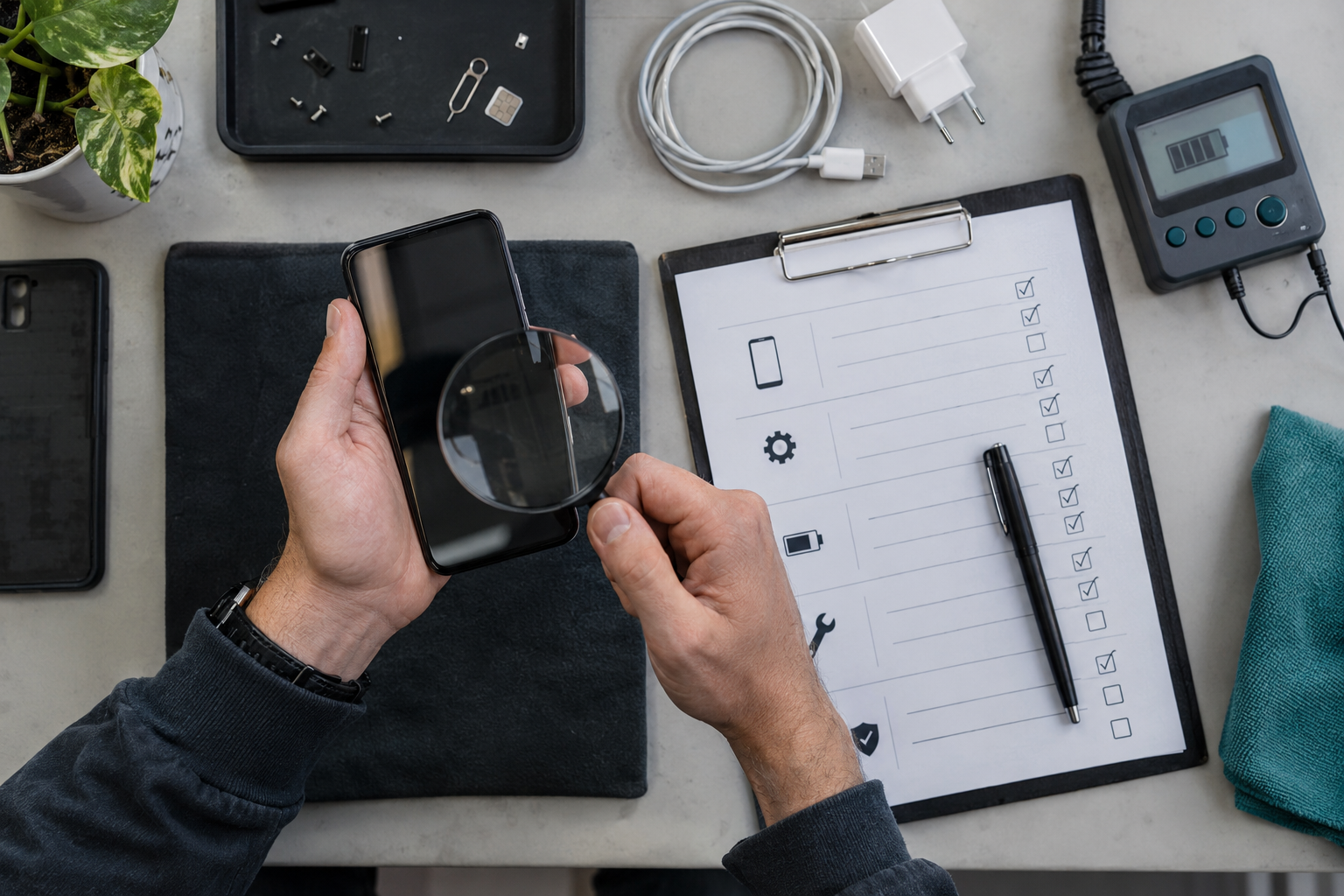
01 · Grading basics
Why aren’t A+, A and B the same standard?

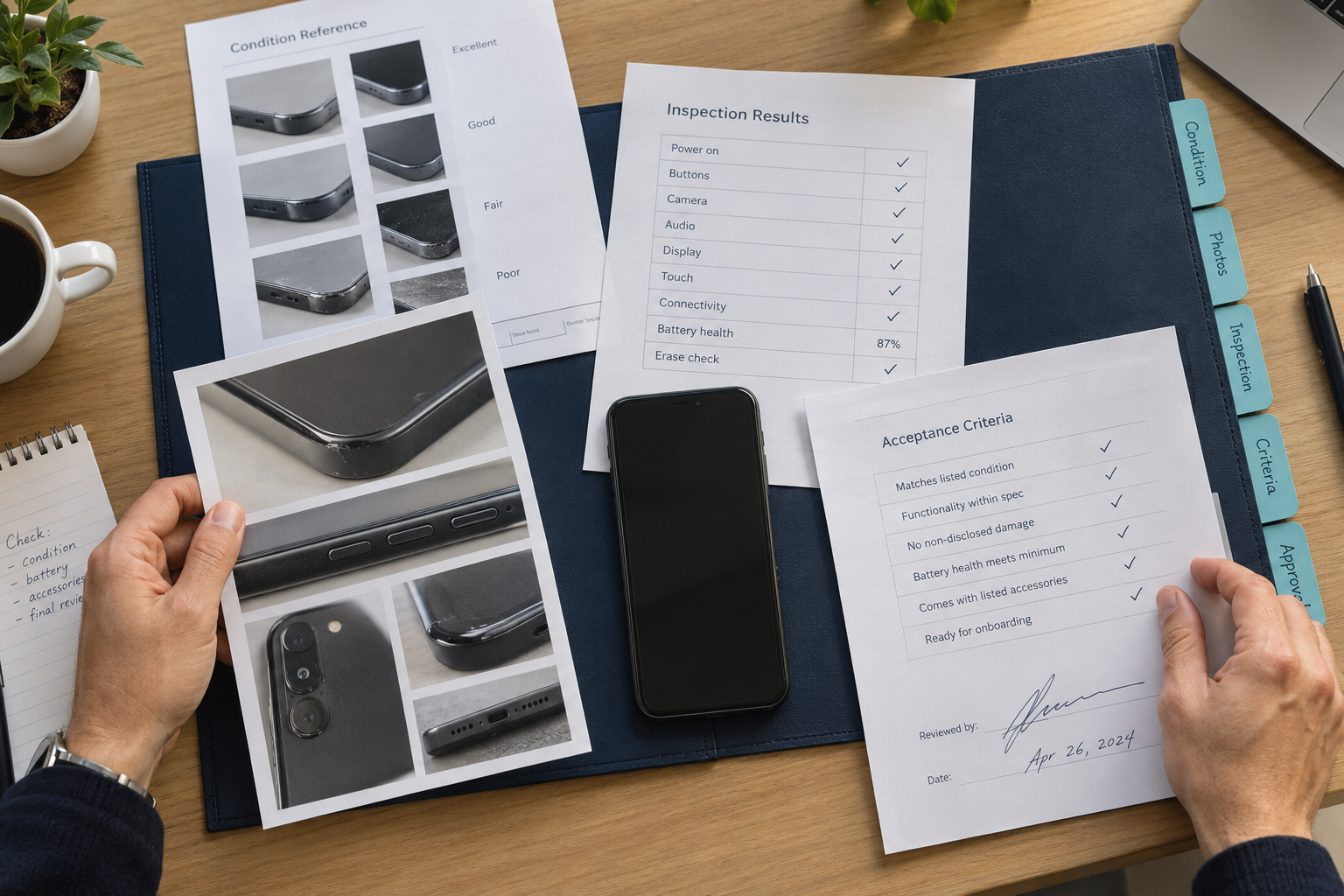
Suppliers select labels, thresholds, and disallowed items themselves. Some use A+, A, and B, some use Mint, Excellent, Good, and Fair, and some rate the screen and body separately.
| possible differences | Why it affects purchasing |
|---|---|
| The screen is merged or separated from the body | The same overall grade may mask poor performance in a certain area |
| Visible trace tolerance varies | Observation distance, light and angle will change the results |
| Batteries included or judged separately | Appearance grade does not necessarily bring a lower battery limit |
| Maintenance history included or otherwise disclosed | Beautiful appearance does not indicate the source of the parts |
| Functional defects are classified separately | Low appearance level should not be equated with failure by default |
| The inspection environment is different | Strong oblique light is more likely to show fine marks than ordinary indoor light |
The public platform also shows this difference: eBay Refurbished uses Certified, Excellent, Very Good, and Good; Back Market uses Premium, Excellent, Good, and Fair, and associates functional requirements and appearance levels to its own project rules. They can only prove that the labeling system is different and cannot be directly converted into A+, A, B for a certain supplier.
eBay Refurbished Condition Description · Back Market Conditions
02 · Illustrative comparison
How can A+, A, B form enforceable standards?

| Check area | A+ Example | A Example | B example | written agreement |
|---|---|---|---|---|
| Screen off surface | Nearly traceless under normal observation | Slight fine marks visible under oblique light | More or more obvious scratches are visible | Cleanliness, light, distance and angle |
| Borders and corners | Minimal traces of use | minor scratches | Obvious scratches or discoloration | Whether bumps, chips or deformations are acceptable |
| back cover | nearly tidy | A few shallow marks | Visible scratches or wear | Crack, Delamination and Replacement Disclosure |
| lens cap | No obvious visible damage | Slight marks on edges | The wear of the outer ring is obvious | Specific rules that must not affect imaging |
| overall appearance | Close to high-quality cosmetic condition | Light feeling of use | Obvious sense of use but complete structure | Samples, photos and items not accepted |
There is no universal number or length of scratches specified here. Dents, chips, cracks, bent frames and lens damage must have separate acceptance rules and cannot be allowed by default just because they are lower grade.
03 · Screen and body
Scratches, bumps and display performance should be checked separately

Appearance inspection
- Screen glass scratches;
- Frame wear and discoloration;
- bumps at the four corners;
- scratches or cracks on the back cover;
- Lens cover damage;
- Gaps, warping or deformation.
Display and touch check
- Bad pixels, bright pixels and stuck pixels;
- lines or flashes;
- Uneven brightness and color cast;
- OLED screen burn-in or image retention;
- Touch dead zone;
- Accidental touch or ghost touch.
Just because the glass is clean does not mean that the inside of the display panel is normal. Photos also cannot rule out intermittent flickering, touch issues, and display anomalies in low light. Both parties should unify the lighting, viewing angle, cleaning status and whether to retain the protective film; the protective film may cover old marks or cause scratches on its own.
Folding machines also need to establish model adaptation standards for the inner screen, creases, hinge movements and possible warping layer structures, and the rules for straight mobile phones cannot be directly applied.
04 · Battery
Battery health must have independent acceptance conditions

| battery information | able to explain | limitations |
|---|---|---|
| Current battery level | Remaining power at this moment | Does not represent total capacity or battery life |
| Maximum capacity/health status | Estimated aging of the system | Different brands and algorithms cannot be directly compared |
| Number of cycles | Records reflect charge and discharge usage when available | Not all models are displayed to users |
| Battery life and shutdown behavior | Shows stability in actual use | Affected by load, temperature and test duration |
| Replacement history | Indicates whether a replacement battery has been installed | Still need to check part type and test results |
Battery list in order
- Minimum rules and measurement methods;
- Test dates and available system warnings;
- Whether the battery has been replaced and parts disclosed;
- Charging stability, abnormal heating, expansion or shutdown;
- Alternative test when indicator fails to be read.
The agreed percentage is a condition of purchase only and is not a universal definition of Grade A or B. Replacing a new battery will not change the fact that the phone has been used. If a bulge or raised body indicates battery damage, routine charging tests should be carried out and evaluated by qualified personnel.
05 · Parts History
Have the screen, back cover and camera been replaced?
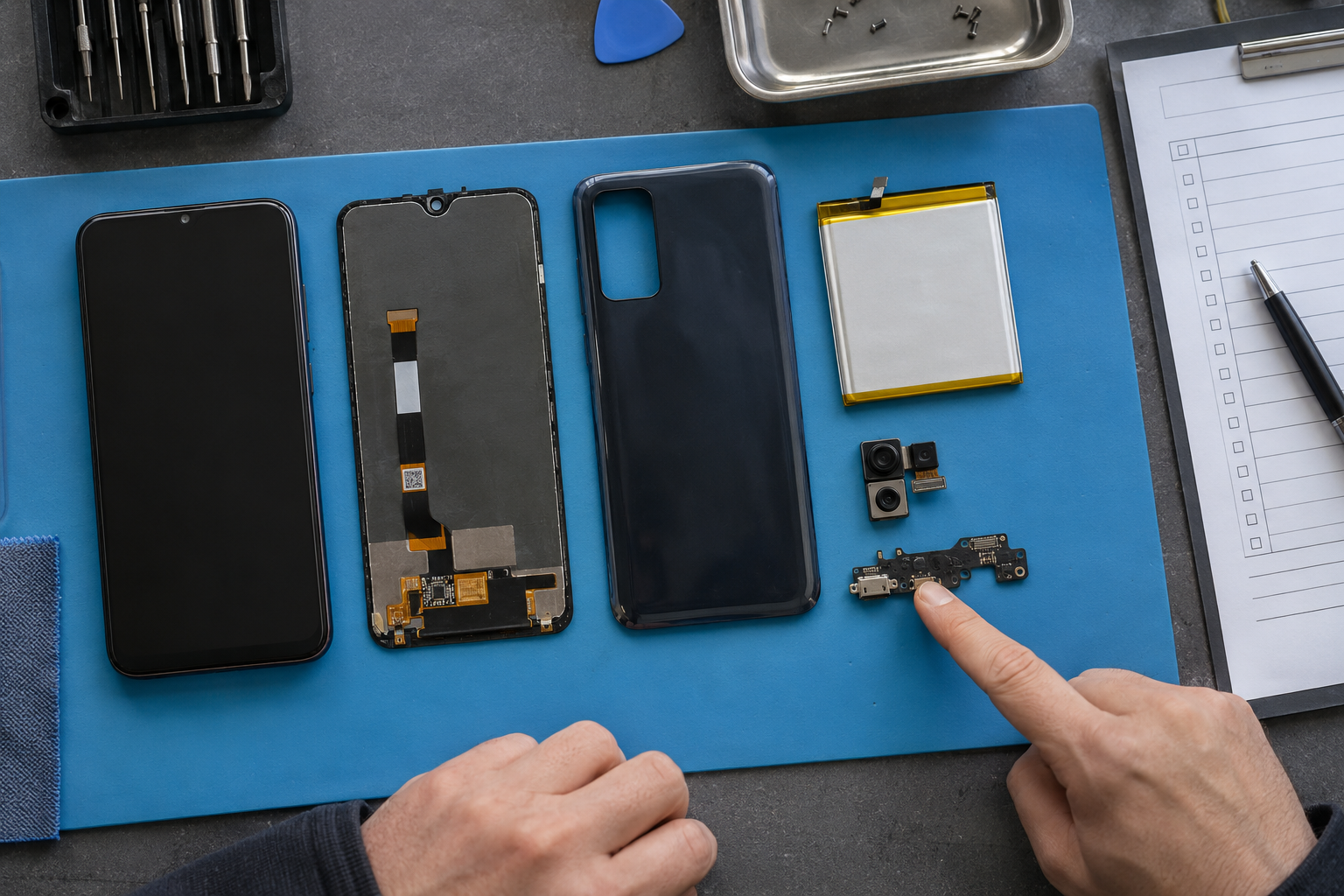
Appearance grading and part history must be separated. When suppliers say ”original” or ”OEM”, they should clarify in writing whether they mean the original machine has not been replaced, new original parts, disassembled original parts, third-party replacement parts, or unknown historical parts.
| parts | Should ask | Evidence and limitations |
|---|---|---|
| display component | Replacement, type, touch and color testing | System prompts, maintenance documents and manual testing combined |
| Back cover/chassis | Whether to replace, structure and bonding status | Replacement improves appearance but does not reverse other wear and tear |
| Battery | New, used, third party or unknown | System information does not cover the entire history |
| rear camera | Whether the module is replaced, focused and imaged | Prompt information cannot replace shooting test |
| Proactive/biometric components | Maintenance, calibration and functional status | It needs actual measurement, not just the appearance. |
| Charging components | Whether the interface, cable or wireless charging parts have been repaired | Stability and data connection results must be documented |
Apple’s Parts & Repair History serves as a qualified example: the display depends on the model, system, and parts, and does not represent all possible repairs. The absence of True Tone, the presence of a parts prompt, or a certain diagnostic score also does not alone demonstrate a specific repair procedure.
Equipment that has been used or repaired cannot be guaranteed to restore factory waterproof performance, nor should it pass water immersion verification.Apple: iPhone parts and repair history
06 · Function
Face ID, fingerprint and charging must be tested independently
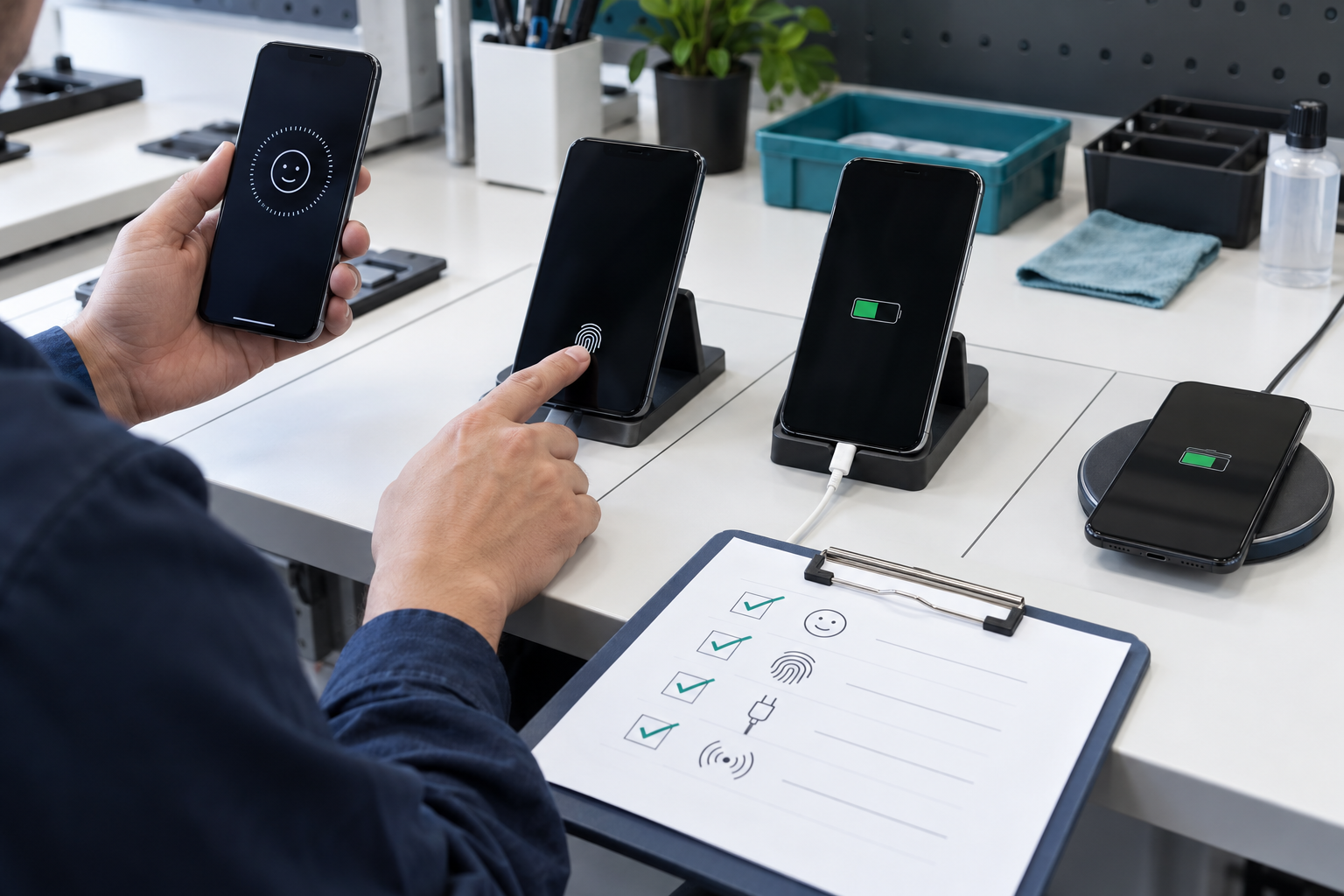
| Function | Practical check | Record results |
|---|---|---|
| Face ID | For iPhone, complete registration and unlock again | Pass/Fail/Not Tested/Not Applicable |
| Fingerprint recognition | Applicable devices register different angles and unlock repeatedly | Pass/Fail/Not Tested/Not Applicable |
| Wired charging | Use compatible and confirmed normal cables and power supply | Stability, disconnection and anomalies |
| wireless charging | Supported models use known normal chargers | Continuous charging and temperature performance |
| Charging port and data | Touch Check for looseness and verify data connection as required | Pass, Intermittent or Fail |
| Camera, microphone, speaker | Test front and rear shooting, recording and playback separately | Imaging, focus and sound results |
| Buttons and sensors | Step-by-step operation of power, volume, rotation and proximity sensing | Item-by-item results and untested content |
Biometrics should be tested in appropriate permissioned environments, with no biometric information collected or disclosed; Face ID should not be confused with regular camera face unlock. The appearance of the charging icon does not mean continuous and stable charging, nor does it prove that the advertised power is achieved.
Untested functions must be written ”Untested” and cannot be considered passed. A device that looks beautiful but fails to biometric or charge should not be accepted as ”fully functional” just because of its high cosmetic condition.
07 · Visible evidence
Why should buyers request actual photos and videos?
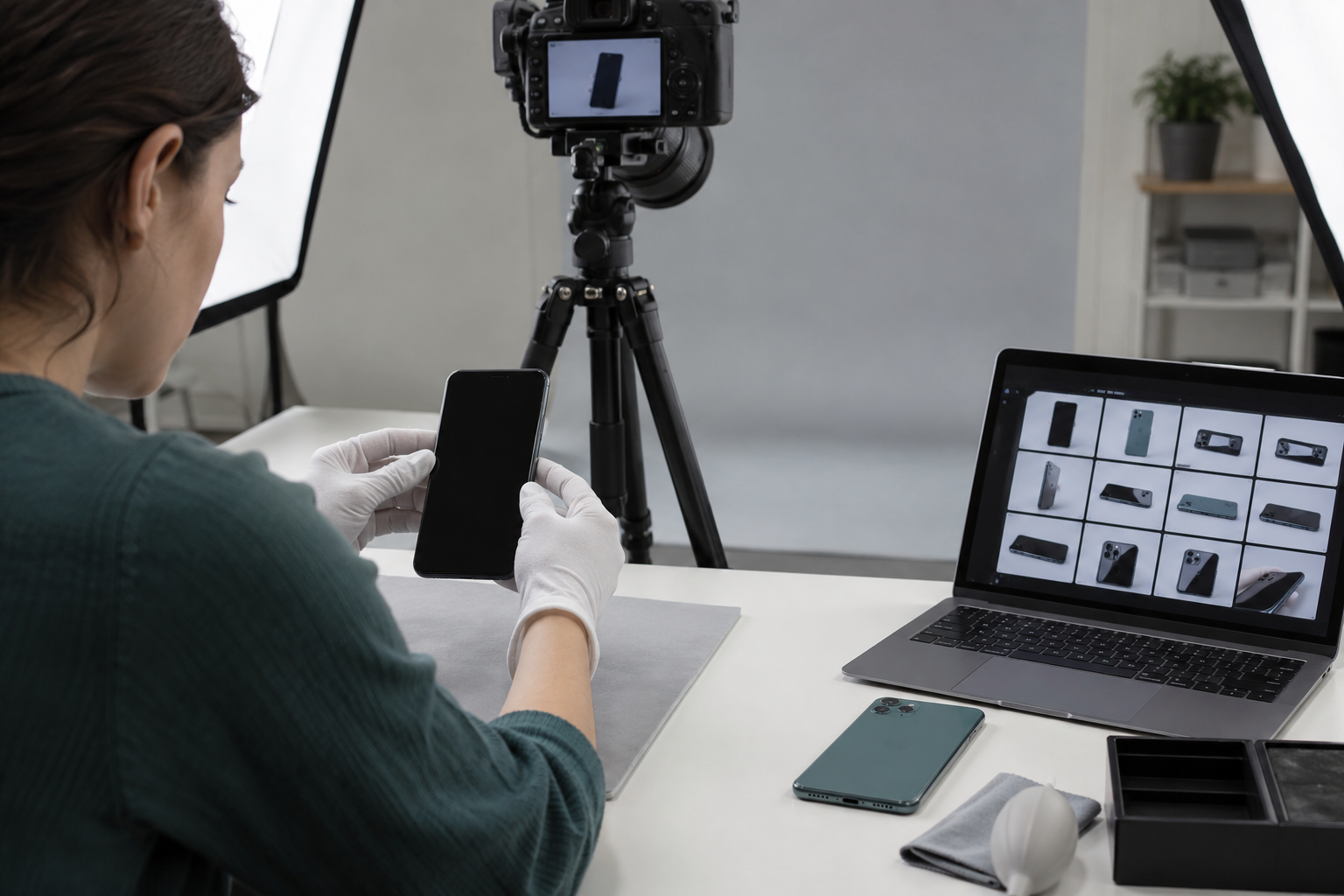
Photo range
- Screen off and screen on front;
- back cover;
- All borders and corners;
- lens cap;
- charging port;
- Close-up of declared defects.
Shooting requirements
- The lighting is clear and not overly retouched;
- Defects are not hidden by filters;
- There is a corresponding number to the device or batch;
- For high-value single machines, provide single machine evidence as much as possible;
- Videos are only used to supplement observable features.
Stock images and featured mockups can only illustrate product types or better individuals. Wholesale orders should distinguish between ”representative batch photos” and ”photos of each device”; the former cannot prove that the entire batch is completely consistent.
Pictures are also not a substitute for touch controls, battery life, intermittent failures, or full functionality testing. If a platform does not provide stand-alone photos, buyers should instead rely on the platform’s written standards, available inspection arrangements, and return terms, and cannot assume that each platform promises real-life photos.
08 · Inspection records
What should be included in a useful inspection report?

- Supplier or inspector identity and inspection date;
- Accurate model, capacity and equipment or batch number;
- Record appearance by screen, bezel, back cover and lens;
- Battery results, test methods and times;
- Function-by-function results;
- Known repairs, parts tips and disclosures;
- Account or carrier restrictions;
- photos corresponding to findings;
- Untested items, exceptions and final disposition.
”100% tested” is worse than clearly listing the test items and results. The report must also indicate whether it covers a single unit, a sample, or the entire batch. Software diagnostics often still require manual inspection, as appearance, intermittent failures, camera imaging, and charging stability may not be concluded by automation alone.
The full IMEI and serial number should be kept in private procurement documents, with only masked or fictitious identification used for public examples. Inspection reports also do not guarantee future reliability, let alone prove that there are no hidden faults.
09 · Purchase Order
How to write grade into wholesale purchasing specifications?

Editable specification structure
- Supplier grade designation and buyer appearance standards;
- Functional requirements and screen defect exclusions;
- Battery rules, test methods and expiry dates;
- Replacement parts allowed and repairs that must be disclosed;
- Packaging, accessories, inspection scope and sampling plan;
- Replacement, repair, discount or return in case of non-compliance.
Hypothetical writing:”Level A accepted as per attached appearance list; all functional tests passed; attached battery rules met; all known replacement parts must be disclosed.” It is the attachment conditions, not the letters, that really control acceptance.
The mixed batch should record the quantity according to the model, capacity and agreed cosmetic condition. Different grades cannot be averaged into one description. If sampling is used, batches, sampling selections, defect categories, and acceptance plans should be defined; there is no universal disproportion that applies to all transactions. Sample approval does not prove that every unit delivered is in the same condition.
10 · Quotation and receipt
How do you compare quotes and handle grade disputes?

| comparison factors | Why affects value |
|---|---|
| actual appearance | Determine salable status and customer expectations |
| battery rules | Impact on battery life, repair and replacement costs |
| replacement parts | Impact Disclosure, Compatibility and Aftermarket Risks |
| Function coverage | Untested items will be transferred to the buyer |
| Accessories | Impact on complete delivery and procurement costs |
| Return shipping | Impact on the actual cost of dispute resolution |
| Warranty or Remedy | Determine responsibilities after problems arise |
| Inspection and rework | May change total cost of seemingly low price |
- Match the arrival with the approved order line;
- Carry out the inspection methods agreed upon by both parties;
- Record differences promptly;
- Preserve the reference relationship between equipment and packaging;
- Request a replacement, repair, discount, return or expressly accepted downgrade as per contract.
Grade disputes should be resolved on the basis of written standards and evidence, rather than disputes over customary understandings of letters.

FAQ
Frequently asked questions about second-hand mobile phone grades
The letter is just a label; the answer must go back to supplier standards, evidence of equipment, and contracts between the parties.
Are A+-rated phones equal to new phones?
Not equal to. A+ usually only expresses good appearance under the supplier’s standards and does not prove that the device has never been activated, never used, that the parts are all original, or that the battery is nearly new. Sales condition and appearance grade must be confirmed separately.
Can grade A phones have scratches?
Possibly, but where it is allowed, visible in what light and distance, and whether bumping is accepted depends on written standards from both parties. You cannot infer from letters alone.
Does level B mean the phone has a functional failure?
uncertain. Many systems designate B for more obvious cosmetic wear; functional defects should be declared separately. The procurement contract should clearly use all features as a baseline, or list exceptions item by item.
What should the battery health of an A+ or A-rated phone be?
There is no uniform numerical value that is automatically generated by letter grades. The buyer needs to agree separately on minimum rules, test methods, test dates, warning messages and replacement history.
Can a mobile phone with a new screen still be rated as high-grade?
Possibly, because appearance, parts policy, repair disclosures, and functional performance are different dimensions. The key is whether the supplier discloses part type, repair status and test results as agreed.
Does Level A guarantee that Face ID or fingerprints work properly?
cannot. Biometric identification requires independent completion of registration and repeated unlocking tests, and records of passed, failed, not tested, or not applicable. Good looks are no substitute for evidence of functionality.
Are A+, Mint, Excellent and Like New interchangeable?
Automatic conversion is not possible. These tags come from different vendors or platforms and may have different inspection methods, allowable wear, functional requirements and after-sales terms.
Can actual photos replace the inspection report?
cannot. Photos are good for documenting visible appearance, and reports should document batteries, functionality, service tips, untested items, and anomalies. The two complement each other.
Can diagnostic software prove that all parts are original?
cannot. Software and system repair history can only display information within the scope of its support and is limited by model, system and component; it still needs to be combined with manual inspection, repair documents and supplier disclosure.
What should I do if the arrival of the goods does not meet the agreed grade?
Inspect in a timely manner according to the acceptance method in the contract, keep the corresponding relationship between equipment, packaging and order lines, record photos and test results, and request replacement, repair, discount, return or downgrade acceptable to both parties within the time limit as agreed.
Summary
Use grades as labels and evidence as the basis for decision-making
A+, A, and B are useful abbreviations only if the underlying standard is clear. When purchasing, you should:
- Compare appearance conditions rather than just letters;
- Additional battery requirements;
- Request Repair and Parts Disclosure;
- Verify important functions;
- Align photos and reports to actual supplied equipment.
The final acceptance shall follow the inspection standards agreed by both parties and the actual condition of the equipment.
Second-hand mobile phone purchasing consultation
Discuss your used phone grading requirements
Please specify model number, quantity, desired cosmetic condition, battery requirements, and allowed replacement parts in your request to convert the grade label into an enforceable purchasing condition.

Related Articles
Continue to improve second-hand mobile phone purchasing specifications
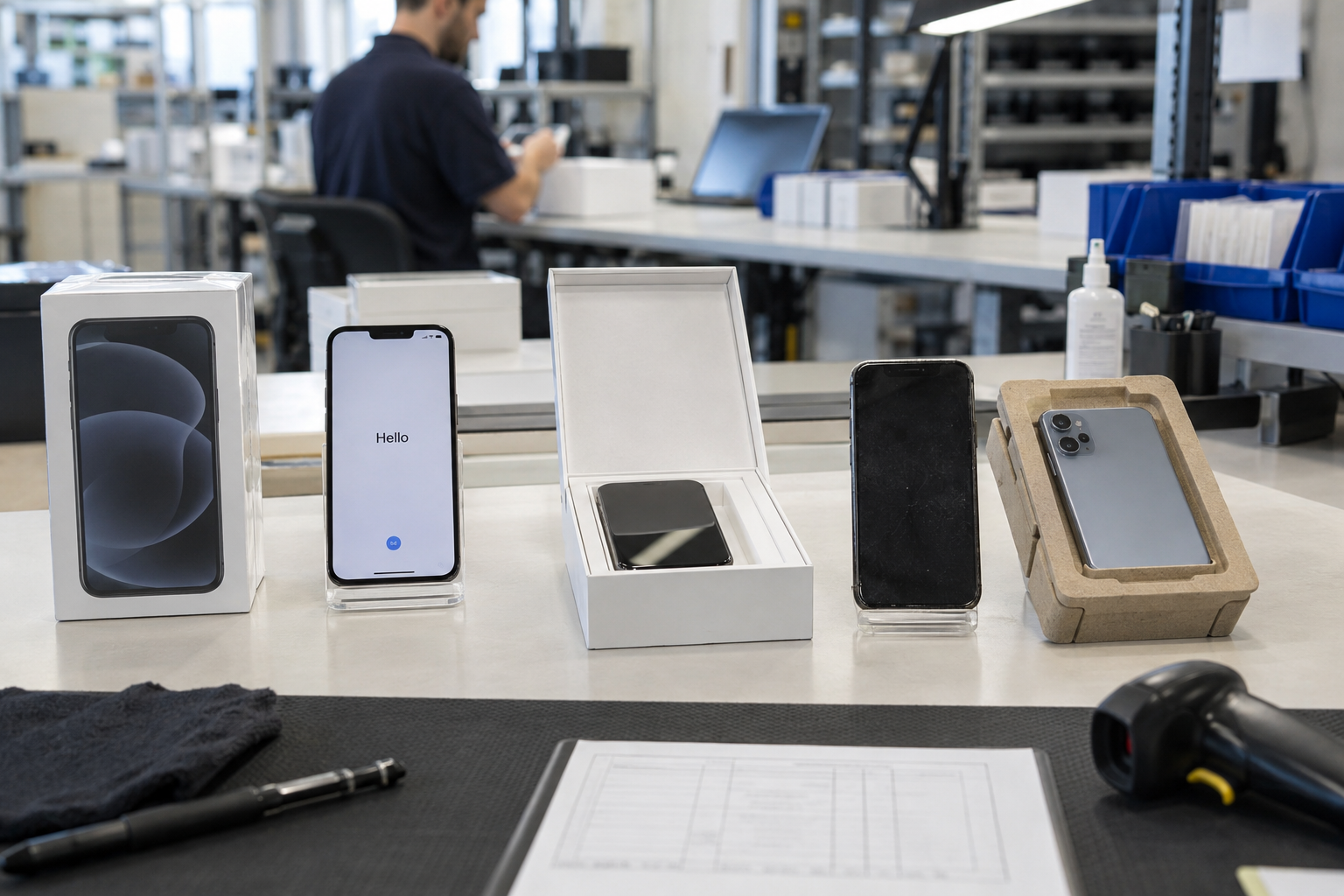
New, activated, open box, used and refurbished phones
Understand appearance grade separately from sales status, activation, use and refurbishment.

A complete guide to purchasing multi-brand, multi-SKU mobile phones in China
Apply grade standards to mixed orders, quotes, inspections and receipts.

Used iPhone Buying Guide
Check battery, account limits, parts history and feature performance.
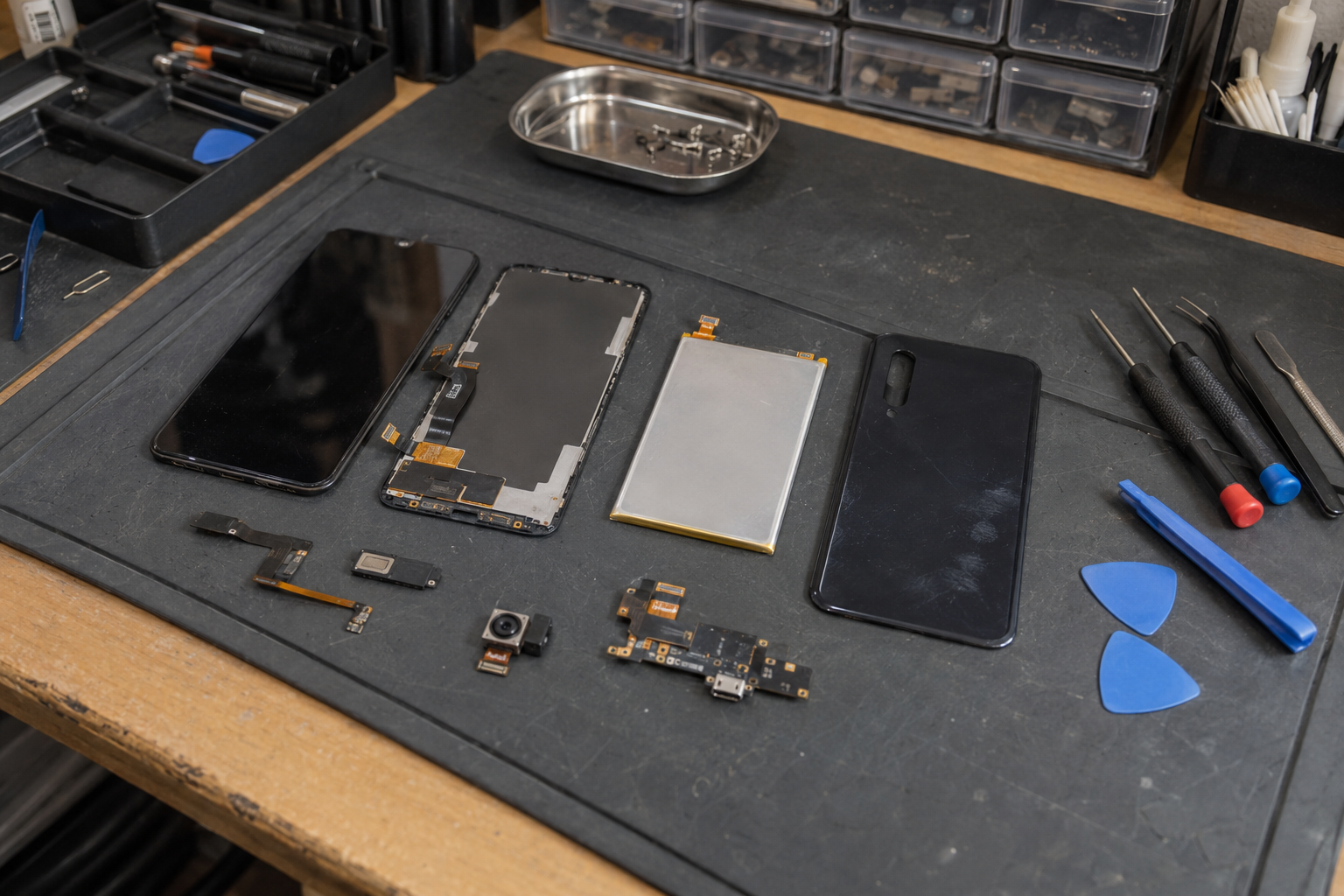
Mobile Phone Repair Accessories Guide
Learn about common replacement parts and questions buyers should ask.